



I met Miguel Ángel last year. Of course, since we live in this tiny mountain village, Genalguacil, when two artists become our neighbours, like Miguel and Kendra, everyone will find out. This is especially true when the person referred to as "everyone" is Raluca, who is an "amazing people" aficionada (guilty of charge).
So I knew back then that I really needed to learn more about my new neighbours. Miguel is the kind of man who is effortlessly cool and kind. On top of that, he’s a self-taught artist, so I was like: "Are you for real?" That’s crazy.
His artwork is just like him: full of colour, full of life, where each detail carries its own message and plays a role within the whole.
Last weekend, I was so happy to support Miguel by attending his first exhibition at Galería Isolina Arbulu in Marbella, featuring his painting series "The Day Animals Behaved Like Humans" (El día que los animales se comportaron como los humanos).
I had a lovely conversation with him, and he told me: "I love telling stories." And so do I. So here we are, telling a story about a wonderful self-taught artist who truly deserves our applause and support.
Always support and promote artists and their work.
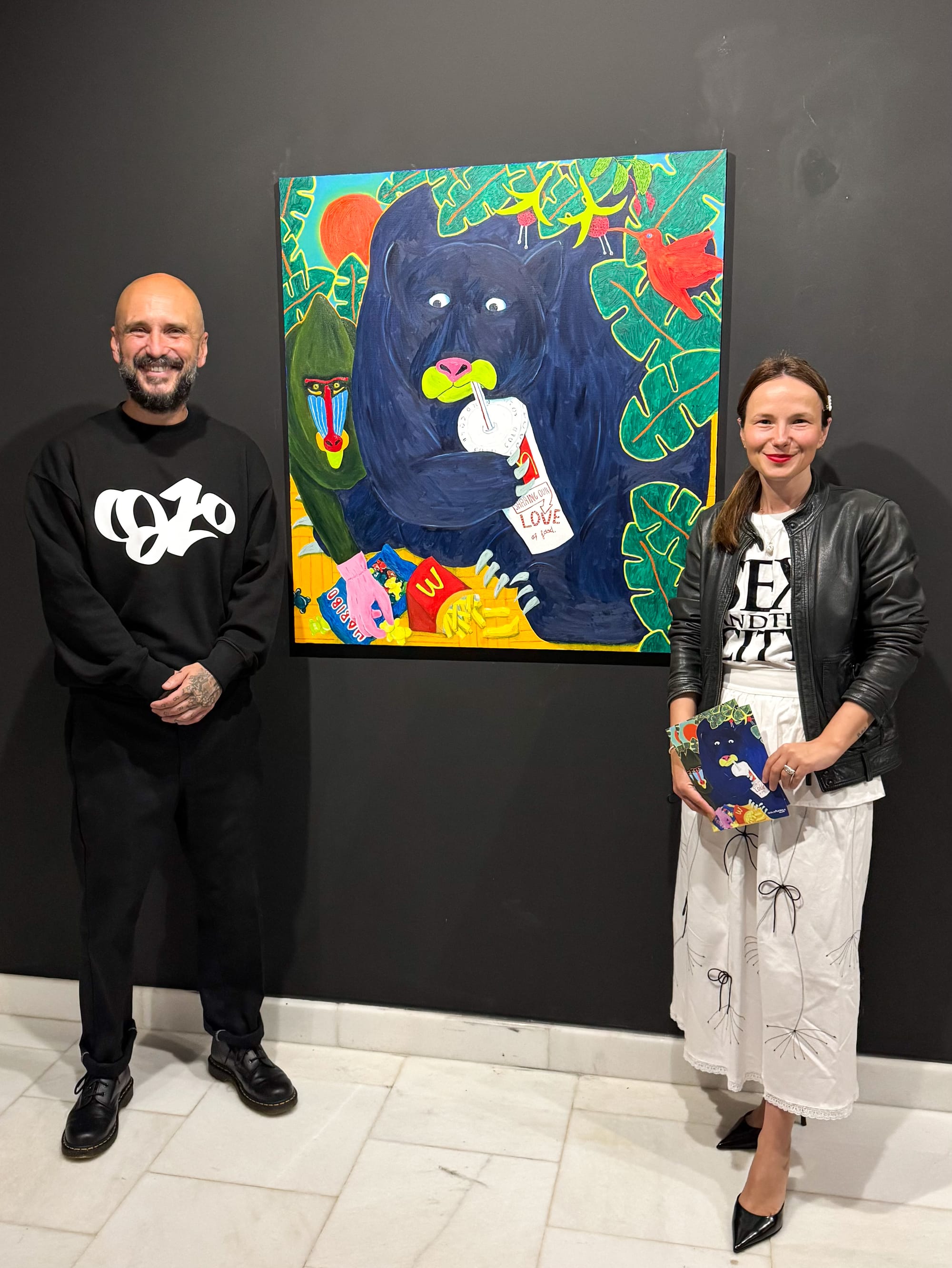
I still find it fantastic that you are a self-taught artist; how would you describe the evolution of your style, and how did you switch your profession from working in television to becoming an artist with exhibitions?
When I was working in TV and left the office, I had to wait until 8:00 p.m. to start painting or creating something, so I was exhausted, and in the end, I wasn’t making progress. That is why I decided to take a week off to see if I could dedicate myself to creating every day, and I did.
So, a year later, I decided to leave my job, where I had worked for 18 years, to move to Donosti and start studying ceramics there.
When you haven’t studied fine arts, you inevitably have to practice on your own, and you don’t have five years to try many different techniques. But from the beginning, I’ve had a very distinctive style, especially characterized by the use of color, so I follow my instinct when creating each painting and learn from every piece.
How and why did you choose "Cazo" as your artist name?
When I was a teenager and I was living in my neighborhood, my friends used to call me "Cazo" because of my haircut style. Over the years, only my friends kept calling me "Cazo", and I didn’t want to lose that nickname, so I decided to use it as my artist name.
How did the idea for “The Day Animals Behaved Like Humans” come about?
In Spain, when someone commits a violent act, we often say they behave like an animal, and I’ve always found that unfair, because animals are neither good nor evil. Their actions contain no emotion, much less malicious intent. In this series, I painted seven scenes using animals as protagonists but acting like humans, showing the worst side of us.
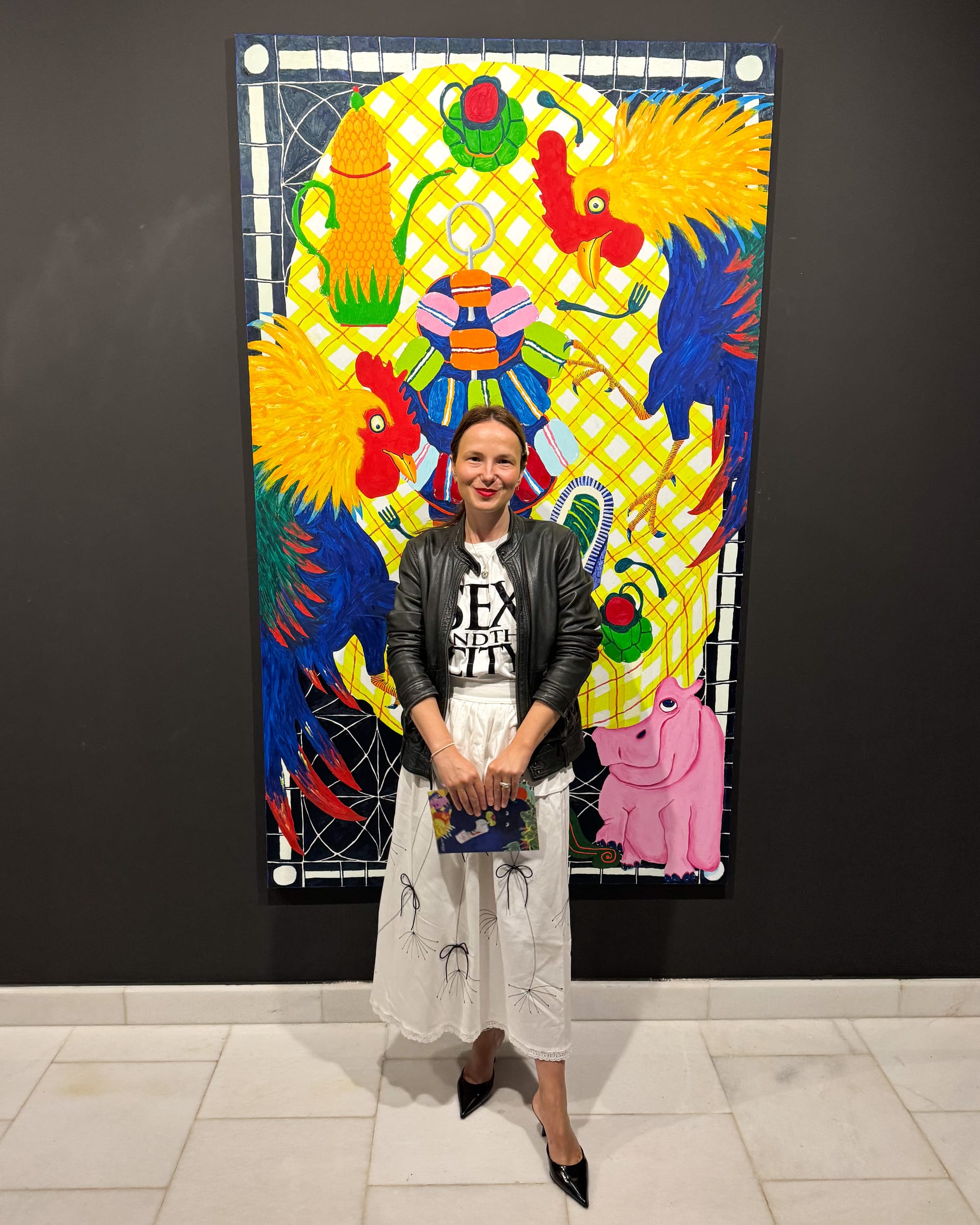
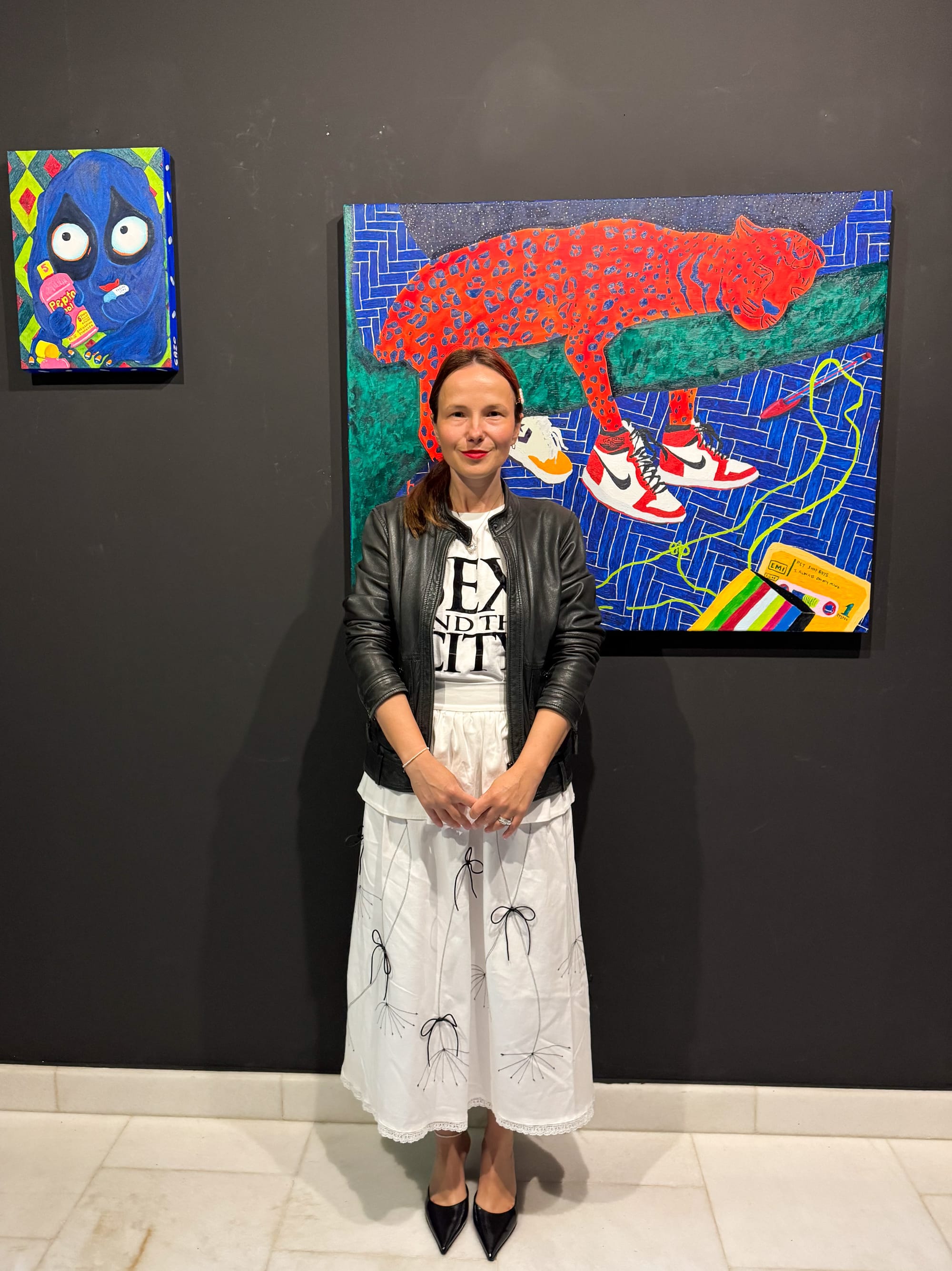
What does it mean to you to exhibit your work in a gallery on the Costa del Sol, like Galería Isolina Arbulu?
After deciding to leave Madrid and move to Genalguacil, I understood that the next step was to start contacting galleries along the coast. Isolina quickly welcomed me and arranged a meeting to see my work. She really liked my art, and she mentioned that I was a type of artist she didn’t have on her roster, so she decided to support me. The process of starting to work here on the coast has been quite fast.
It’s the first time I’ve worked with Isolina, and I love her gallery. She has an extensive trajectory of many years in the gallery market, and I feel very comfortable working with her; I’m excited.
Is there any piece in the series that feels especially personal or revealing to you?
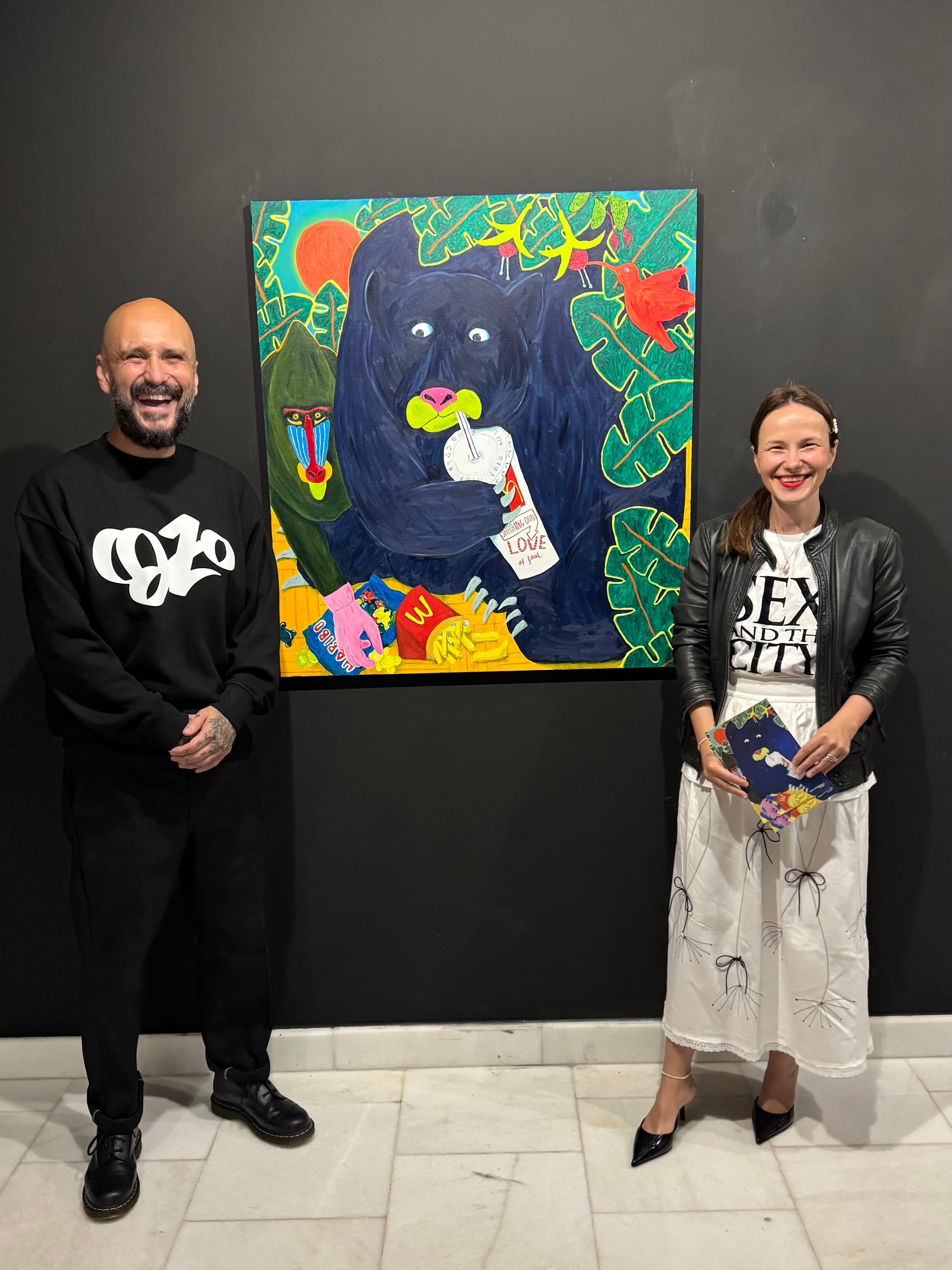
It’s very difficult for me to choose one piece among the seven in the exhibition because every painting I create is based on my life experience; they are self-referential. This means that in each painting, there are certain elements I rescue from my past and apply, transforming them into objects, animals, or backgrounds. I would choose the painting of the bear; I really enjoyed painting that one.
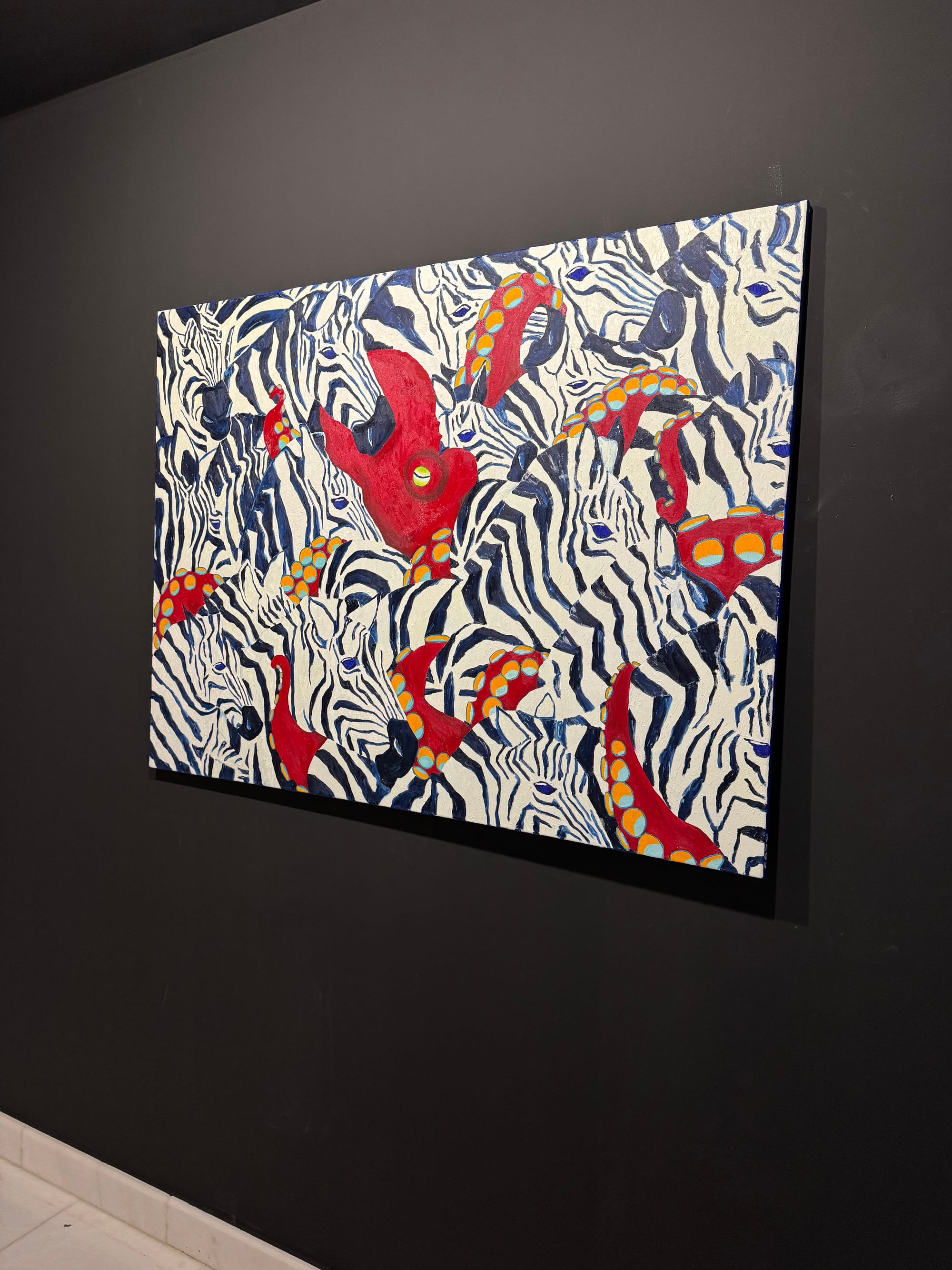
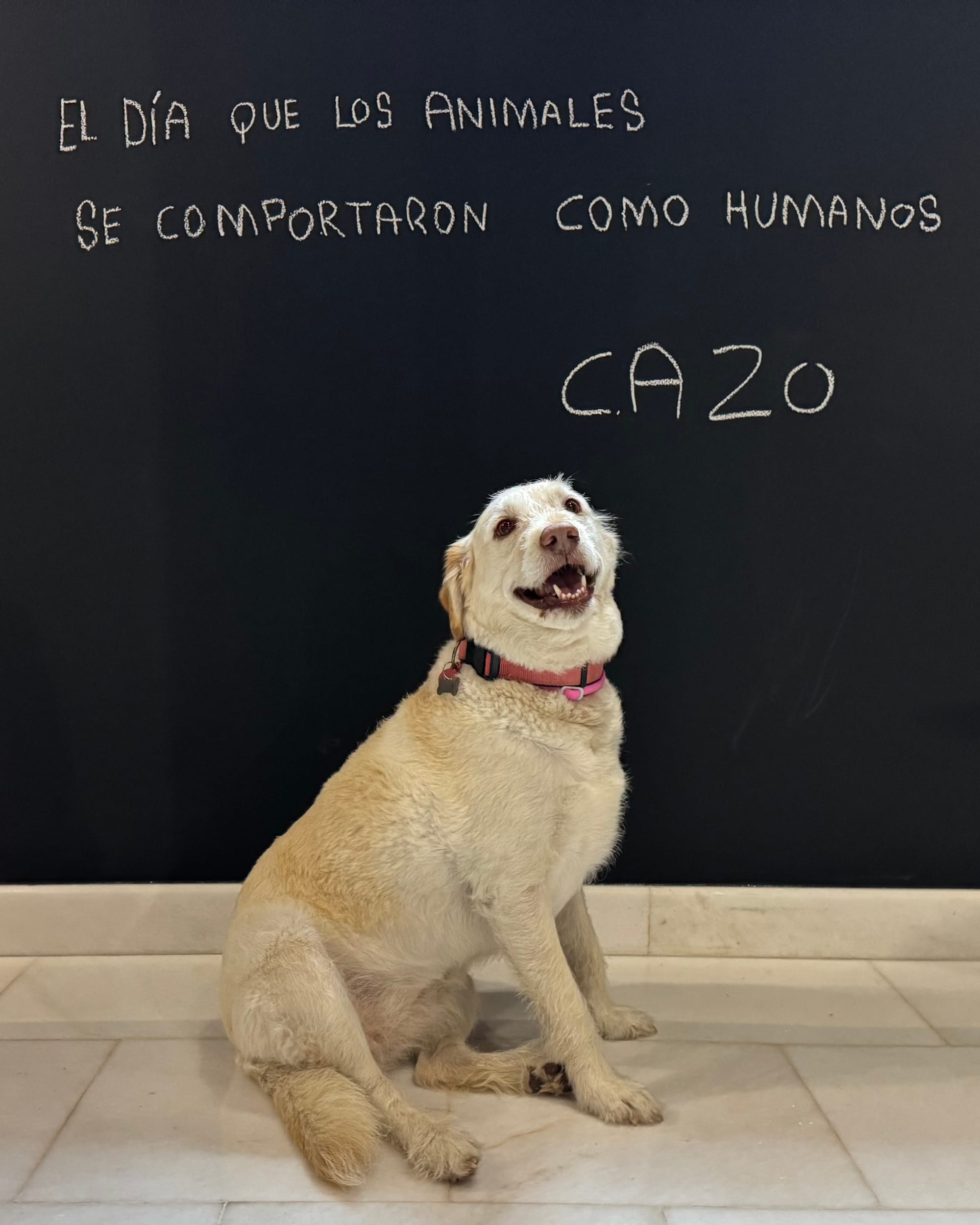
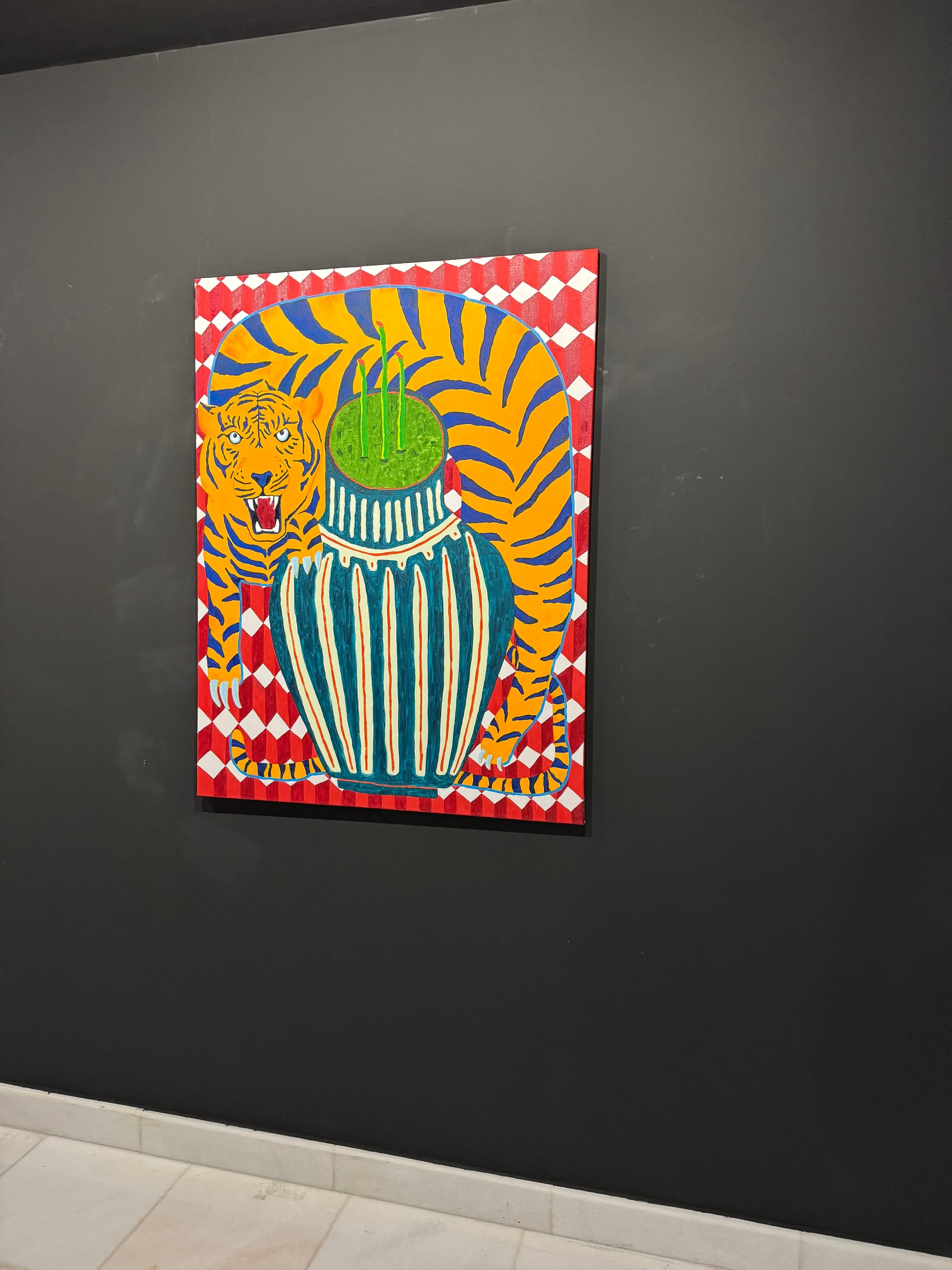
Your works are very, very colorful. I suppose it’s not just your style; maybe there’s something more, a special reason behind it. What drives you to add so much color to your work?
Indeed, the first thing that usually catches attention is the color. I use color intuitively, applying emotion to it. When I discovered the use of color by the Fauvist artists or the Blue Rider group, it blew my mind. I feel very comfortable using colors and shapes that don’t correspond to reality and that also create a vibration between them, drawing the viewer’s attention and pulling them into the painting.
When the viewer tells me they get lost in the painting and its patterns, that’s when the goal is achieved. I adore color!
How does living in a village like Genalguacil influence your work? And what is a typical day like in your studio there?
Living in Genalguacil is magical; as a small mountain village, you must be well organized because you can’t get things quickly like in the city. I’ve realized that since living here, I paint much more calmly, and the work is more settled.
That’s because my studio is in the same house where I live, so I don’t waste time taking a bus or metro to arrive there; it literally takes seconds to arrive. This translates into more thoughtful paintings, increasingly rich in nuances and new brushstrokes. It’s been fantastic for my growth.
Usually, after breakfast and catching up on what’s happening in the world, I put on my painting overalls and start the day. Having the painting so close is great; on one hand, if you come up with something, you can go straight into the studio and apply it. On the other hand, when you’re out of ideas, the slow passage of time can feel overwhelming. Even so, I prefer it to the pace of the city.
If your work could leave a message in the world, what would it be?
I love telling stories. I don’t really know if they create a change in the people viewing my work. I like to think that the scenes in my paintings make people vibrate, even if only for a fraction of a second, capturing their attention before letting them go with a good feeling. So, telling stories could be my goal.
Miguel's Instagram account, here.
If you want to admire and purchase his artwork, the exhibition will be on view in the Black Room, Galería Isolina Arbulu, until July.


